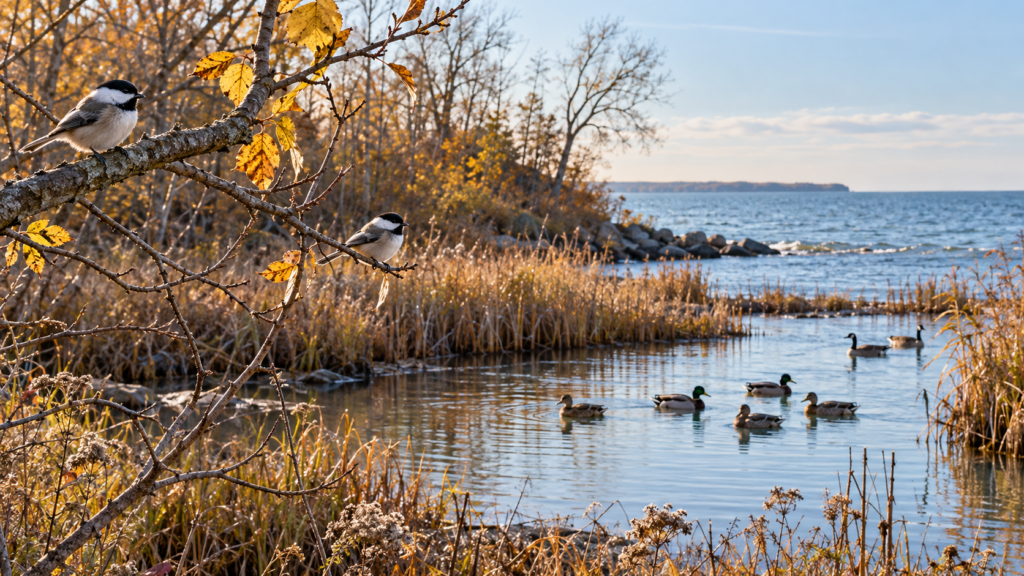
One of the best parts of living in Newcastle is how quickly an ordinary walk can turn into a wildlife outing. At Samuel Wilmot Nature Area, the trails, wetlands, Wilmot Creek and Lake Ontario shoreline come together within minutes of the Port of Newcastle.
Late fall is quieter than summer, but it is not an empty season. The leaves open up views through the trees, migrating waterfowl gather along the shoreline and familiar year-round birds become easier to notice. You do not need specialist equipment or a long drive. A warm layer, a pair of binoculars and a little patience are enough to get started.
Why Samuel Wilmot Nature Area is special
The Municipality of Clarington describes Samuel Wilmot Nature Area as 77 hectares of stream valley lands and wetlands on the Lake Ontario shore. The Waterfront Trail crosses the property, while walking trails provide access to Newcastle Marsh, Wilmot Creek and shoreline habitat.
That mix of creek, marsh, meadow, woodland and open water is what makes the area valuable for wildlife. It also gives residents several different places to look for birds during one relatively short walk.
What you may see in late fall
Bird activity changes with weather, wind and migration timing, so no sighting is guaranteed. That uncertainty is part of the fun. Common possibilities around Newcastle’s waterfront include:
- Black-capped chickadees: Small, active and often heard before they are seen. Watch wooded trail edges and low branches.
- Blue jays and northern cardinals: Their colours become especially noticeable after most leaves have fallen.
- Downy and hairy woodpeckers: Listen for tapping and scan trunks and larger branches.
- Canada geese, mallards and other waterfowl: Check the marsh, creek mouth and sheltered water along the shoreline.
- Red-tailed hawks and other raptors: Look above open areas and along the treeline rather than only at eye level.
- Winter visitors: As temperatures fall, different ducks and northern birds may appear along Lake Ontario.
A useful approach is to notice behaviour before trying to identify a species. Is the bird climbing a trunk, hovering over the water, feeding in reeds or moving with a flock? Those clues can be more helpful than colour alone.
Where to look
Wilmot Creek: Pause where the trail provides a safe view of the water. Creek edges can attract songbirds, kingfishers and waterfowl.
Newcastle Marsh: Scan slowly across open water and reeds. Birds that disappear into vegetation often reappear a few moments later.
The Lake Ontario shoreline: Look beyond the closest birds. A small group floating offshore may be a different species from the ducks in sheltered water.
Wooded trail edges: Chickadees, nuthatches and woodpeckers often move through mixed groups. When one bird appears, stop and watch nearby branches.
A simple beginner bird walk
- Choose a calm morning and dress for wind coming off the lake.
- Walk slowly for five minutes, then stop for one full minute.
- Listen first. Try to locate the direction of each call before moving.
- Scan from near to far: branches, shrubs, reeds, water and sky.
- Photograph or record a short description instead of guessing immediately.
- Check an identification guide after the walk and keep a simple list of what you saw.
The Merlin Bird ID app from the Cornell Lab of Ornithology can help beginners compare birds by size, colour, location and sound. Treat sound identification as a suggestion and confirm it visually whenever possible.
Wildlife and trail etiquette
The goal is to observe without changing an animal’s behaviour. Stay on established trails, keep dogs under control and give birds room to feed and rest. Avoid playing recorded bird calls, especially repeatedly, because birds may interpret them as a territorial threat.
Do not enter marsh vegetation or approach nests. Carry out everything you bring in. If a bird repeatedly moves away, gives alarm calls or stops feeding because of your presence, step back.
Trail conditions can change quickly in late fall. Check municipal notices, respect posted closures and avoid unstable shoreline edges.
The local Christmas bird count
Samuel Wilmot Nature Area volunteers have previously participated in a Christmas bird count. Committee minutes reported 22 species and approximately 1,450 birds during one count, with interest in making future counts accessible to more residents and inexperienced birders.
Community counts are useful because they turn individual observations into a broader record of winter bird populations. Even if you are not ready to join a formal count, keeping a list from the same walking route throughout the season is a simple way to notice how the waterfront changes.
Nature on Newcastle’s front doorstep
The attraction is not only the number of species. It is the ability to step outside, follow a familiar trail and find something different each week. The same landscape that supports the salmon run also provides marsh, shoreline and woodland habitat for birds throughout the year.
For families, it can turn a short walk into a scavenger hunt. For photographers, late fall offers clearer sightlines and softer light. For anyone who needs a break from a screen, it is a reminder that one of Newcastle’s best local amenities is not a building or business. It is the living shoreline itself.
Plan your visit
- Samuel Wilmot Nature Area information from the Municipality of Clarington
- Clarington trails map
- Merlin Bird ID
Thinking about making Port of Newcastle or Clarington home?

Brandon Hebert
Realtor · The Hebert Group · Port of Newcastle & Clarington
Written by Brandon Hebert · The Hebert Group · Port of Newcastle Real Estate Specialist
Questions About the Newcastle Market?
I'm your local resource. Let's talk. no pressure, just real insight.
Work With Me