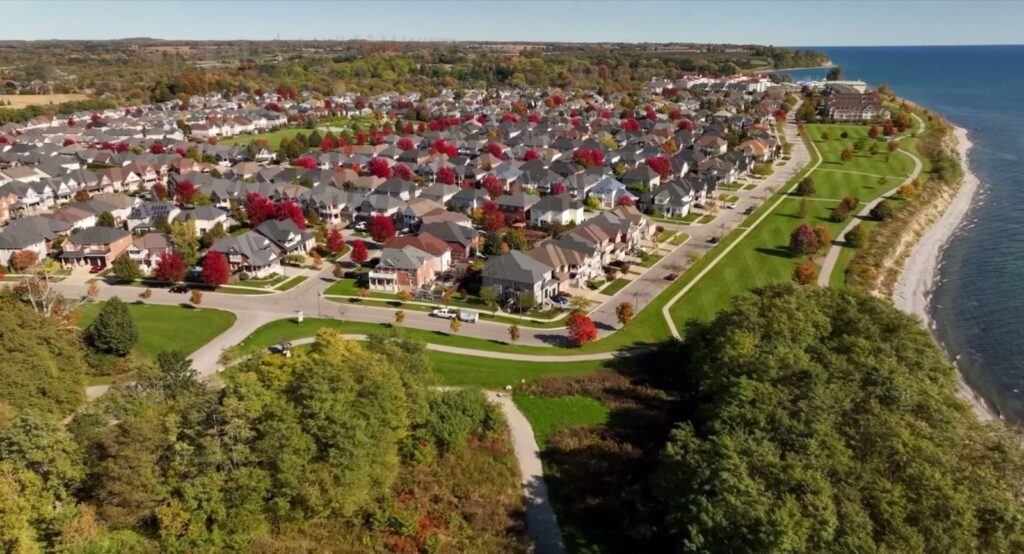
Ottawa tabled its 2026 federal budget on November 5, and housing is one of its biggest themes. The budget, called Masters of Our Destiny, was presented by Finance Minister Francois-Philippe Champagne, and it includes real changes for buyers, builders, landlords, and renters. It also includes a lot of proposals that are not law yet. Durham Region sits on the eastern edge of the Greater Toronto Area, and moves like this in Ottawa are felt here quickly, through Toronto commuters moving east, active new home construction, and resale markets that tend to follow the GTA’s direction. If you own a home in Port of Newcastle, anywhere in Clarington, or across Durham, here is what matters, what has a firm date, and what is still just a promise.
The headline for buyers: more room on mortgage insurance
The most useful proposal for local buyers is about mortgage insurance most people never think about. When a buyer puts 20 percent or more down, the lender can choose to insure the mortgage anyway, because an insured loan can mean a better rate or more lender options. Today, that optional insurance is only available on homes priced under $1 million.
Budget 2026 proposes raising that limit to $1.5 million, and allowing a 30-year amortization on those insured loans when at least one borrower is a first-time buyer or the home is newly built. A longer amortization lowers the monthly payment, although it also means more interest paid over time.
Two cautions. First, this is a proposal with no start date, so today’s rules still apply. Second, it does not change the rules for buyers putting less than 20 percent down; that insured limit has been $1.5 million since December 2024. Locally, though, the proposal lands right in our price range. The median sold price in Port of Newcastle in October was $1,115,000, so many move-up homes here sit between $1 million and $1.5 million, exactly the band this change would open up. And the Port is not an outlier. Across Durham Region, in Bowmanville, Courtice, Whitby, Oshawa, Ajax, and Pickering, a large share of detached homes trade between $1 million and $1.5 million, so this one proposal touches more Durham buyers than almost any other line in the budget.
That reaction fits what we are hearing from the mortgage side of the business. Mortgage professionals have been mostly positive on this budget, and it is not hard to see why. More room for insured lending means more borrowers qualify, with more lenders competing for them. Thirty-year amortizations lower the payment for the buyers who qualify. The February 2027 multi-unit financing opens a door for small landlords and builders that has been mostly shut. And a quieter proposal, letting lenders verify a borrower’s income directly with the CRA, should cut paperwork and fraud at the same time. None of that makes homes cheaper on its own, but it does make financing them a little easier, which is why the mortgage world is calling this budget a net positive for real estate.
Builders and small landlords: the missing middle gets real financing
The measures with the firmest dates are aimed at small multi-unit housing. Starting February 1, 2027, new triplexes and fourplexes can qualify for insured financing of up to 90 percent of value, with no requirement that the owner live in one unit and no price cap. Buildings of 5 to 50 units also get new insurance options, with private insurers competing with CMHC and amortizations of up to 50 years on new builds.
For Durham Region, this is the part most likely to change what gets built over the next few years. Durham is where much of the GTA’s growth is actually landing, with new subdivisions rising across Clarington, north Whitby, and Oshawa, and older village and town lots in places like Newcastle and Orono that suit a fourplex. Gentle density has usually been hard to finance. These rules make those projects easier to pencil out for small builders and local investors. It will not produce homes this winter, but it is a genuine shift, and it has a start date. Buyers weighing new construction should also remember the help already in place: the first-time home buyer GST and HST rebate, worth up to $50,000 on a new home, was highlighted in the budget and is available now.
Supply money, renters, and the foreign buyer ban
The budget adds $13 billion over ten years to Build Canada Homes, bringing its total to $45 billion with a goal of 200,000 homes over a decade, much of it non-market housing. Another $1.5 billion goes to preparing federal land for housing, and the Canada Housing Benefit for low-income renters is renewed at $5.6 billion over ten years. These national programs flow out over years. They matter for supply in the long run, but no one should expect them to move a Durham Region listing price this season.
The foreign buyer ban, set to expire on January 1, 2027, would be extended to January 1, 2029, but only for existing homes. Newly built homes would be exempt, a change meant to support new construction sales. Durham sees less foreign buying than downtown Toronto, so the direct local effect is modest either way, but the new build exemption matters for Durham’s many new home sites, where builders count on every pool of buyers they can get.
One quieter item homeowners may like: deposit insurance is proposed to rise from $100,000 to $250,000, including temporary extra coverage for the proceeds sitting in your account after a home sale.
What this means for Durham Region and the GTA, honestly
The honest answer is that the budget nudges our market rather than moving it. Durham prices take their cues from the wider GTA: Toronto job markets, commuter patterns, and above all the cost of borrowing. That story is being written elsewhere. The Bank of Canada raised its policy rate to 2.5 percent on October 28, its first increase since 2023, and analysts expect the budget itself to have only a muted effect on the bond yields that shape fixed mortgage rates. Our breakdown of what that rate hike means for Clarington buyers is still the more important read for anyone facing a renewal.
For buyers, the practical advice is simple. Do not plan a purchase around a proposal that has no start date. If the insurance change does arrive, buyers in the $1 million to $1.5 million range, a very Durham Region range, should get more lender choice. For sellers, a wider buyer pool at that price point would help, but it is a 2027 conversation, not a reason to change a price today. Anyone budgeting a move will find our guide to Clarington property taxes for home buyers and our look at what the new Clarington council means for Ward 4 more immediately useful.
As the dated measures roll out, especially the February 2027 financing rules, we will update this picture. If you want to talk through what it means for a purchase, a sale, or a small building project here in the Port or anywhere across Durham, that is exactly the kind of conversation we are here for.
Thinking about buying or selling in Port of Newcastle or Durham Region?

Brandon Hebert
Realtor · The Hebert Group · Port of Newcastle & Durham Region
Written by Brandon Hebert · The Hebert Group · Port of Newcastle Real Estate Specialist
Questions About the Newcastle Market?
I'm your local resource. Let's talk. no pressure, just real insight.
Work With Me