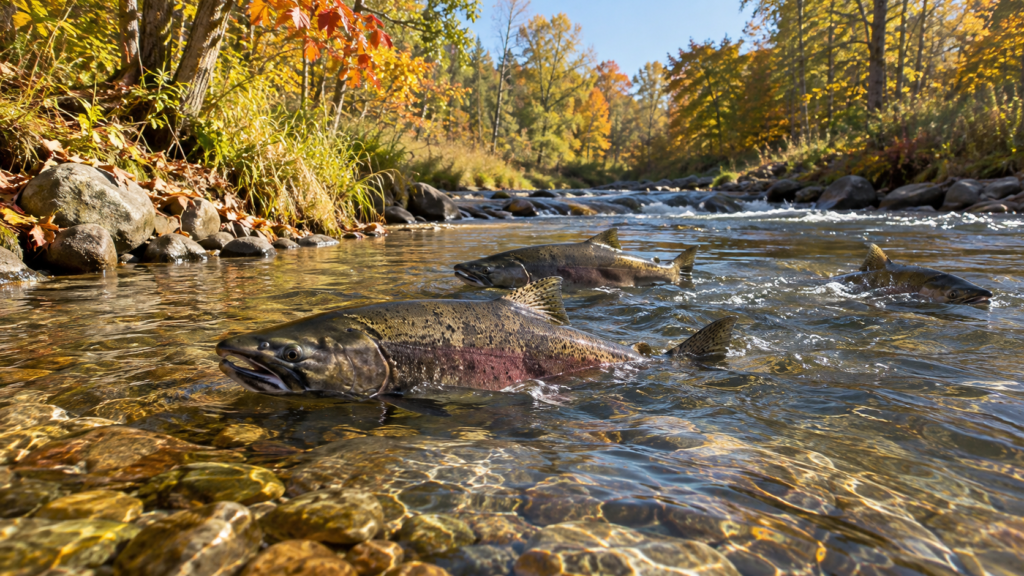
There are weeks when living in the Port of Newcastle feels less like suburban life and more like having a nature documentary at the end of the street. Right now, salmon are pushing upstream through Wilmot Creek beside the Samuel Wilmot Nature Area. For residents, it is one of those remarkable seasonal events that happens almost on our front doorstep.
Why the Wilmot Creek salmon run is worth seeing
Each fall, mature salmon leave Lake Ontario and enter tributaries to complete their spawning journey. Wilmot Creek is a coldwater stream connected to the lake, and the moving water, gravel and shaded valley create the kind of habitat that attracts migratory fish. From the trails in the Samuel Wilmot Nature Area, visitors may see salmon holding in pools, navigating shallow riffles or gathering below a more difficult section of current.
The sight is especially memorable because of the size and determination of these fish. They have spent much of their lives in Lake Ontario, yet they return to moving water to spawn. You do not need to be an angler to appreciate it. Families, walkers, photographers and curious neighbours can enjoy the spectacle from a respectful distance.
The nature area itself covers stream valley, wetlands and Lake Ontario shoreline. Its trail network connects residents with Wilmot Creek, Newcastle Marsh and the waterfront. That combination makes it one of Newcastle’s most interesting places to experience the changing seasons without planning a day trip.
A well known local fishing destination
Wilmot Creek has a long connection to recreational fishing. Provincial fisheries planning documents identify it as a coldwater stream that supports trout and Pacific salmon, and historical assessments recorded substantial angling activity here. Its accessibility, connection to Lake Ontario and seasonal migrations have made the area well known among local anglers.
Calling it a great fishing destination does not mean every part of the creek is open at every time. The exact location matters. The section below the Canadian National Railway right of way is covered by an additional fishing opportunity for Durham Region tributaries, while different rules can apply farther upstream. Lake Ontario itself is also managed separately from inland tributaries. Always confirm the precise place where you intend to stand and fish before casting.
Fishing rules to check before you go
Ontario’s rules are designed to protect fish populations while allowing responsible recreational fishing. They change by species, date, fishing zone and sometimes by a specific section of water. The safest approach is to check the current regulation summary and the province’s Fish ON-Line map on the day you plan to fish.
- Carry the right licence. Most anglers need a valid Outdoors Card and either a Sport or Conservation fishing licence. Some age and residency exemptions apply, but government identification may still be required.
- Confirm the exact zone and water section. Wilmot Creek is associated with Fisheries Management Zone 17, while Lake Ontario is Zone 20. A tributary exception may depend on whether you are above or below a landmark such as the rail corridor.
- Check the species season. Pacific salmon includes Chinook, coho and pink salmon in the Ontario summary. It is illegal to target a fish during its closed season, even if you intend to release it.
- Know your limits. Daily catch and possession limits depend on the licence, species and applicable exception. Trout and salmon are also subject to an aggregate limit.
- Respect sanctuaries and posted restrictions. No fishing is allowed in a fish sanctuary during its closed period, and sanctuaries are not always marked with signs.
Use the 2026 Zone 17 regulations, the Fish ON-Line instructions and the general fishing regulations as your starting points. If anything is unclear, do not guess.
How to enjoy the run responsibly
Salmon are using their remaining energy to move upstream and spawn. Give them space. Watch from the bank or established trail, keep children and pets out of the creek, avoid blocking fish in shallow channels and never move rocks to create a better view. Anglers should handle any fish as little as possible and follow all release requirements.
Good trail etiquette matters too. Stay on established paths, carry out line and litter, and be considerate of walkers and wildlife watchers. A quiet visit is usually the best visit, both for the fish and for everyone hoping to see them.
This is one of the small but powerful benefits of living in Newcastle, Ontario. Lake Ontario, wetlands, wooded trails and a genuine salmon run are woven into the community rather than being somewhere we have to drive hours to find. On an ordinary fall walk, residents can witness one of the Great Lakes watershed’s most impressive seasonal journeys right here at home.
More Newcastle community guides
- See upcoming Newcastle and Clarington events
- Learn where Newcastle is and what daily life is like
- Read how Lake Ontario shapes Newcastle weather
Thinking about buying or selling in Port of Newcastle or Durham Region?

Brandon Hebert
Realtor · The Hebert Group · Port of Newcastle & Durham Region
Written by Brandon Hebert · The Hebert Group · Port of Newcastle Real Estate Specialist
Questions About the Newcastle Market?
I'm your local resource. Let's talk. no pressure, just real insight.
Work With Me